If your numbers look better than your results, the problem is not the training.
I am Eric Franke. I coach athletes on speed, strength and return to play, and I coach the people who coach them. The gap between what an athlete is capable of and what they show in competition is exactly where my work is. Olympic silver medallist in the four-man bobsleigh, working out of Potsdam, out of Latvia, and online with athletes from 11 different countries.
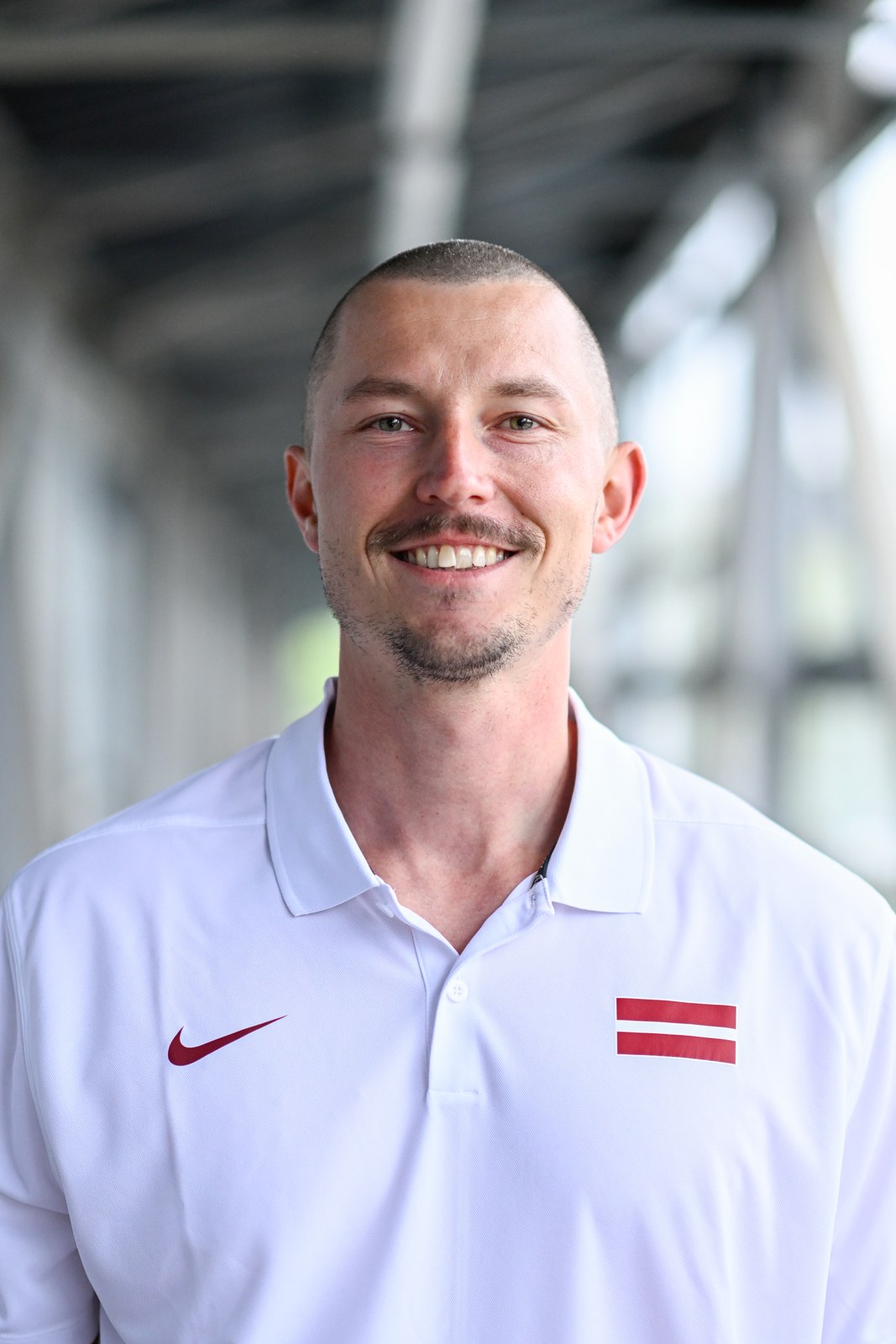 Slot 01Vertical portrait
Eye level, quiet, no equipment
images/eric-portrait-hero.jpg
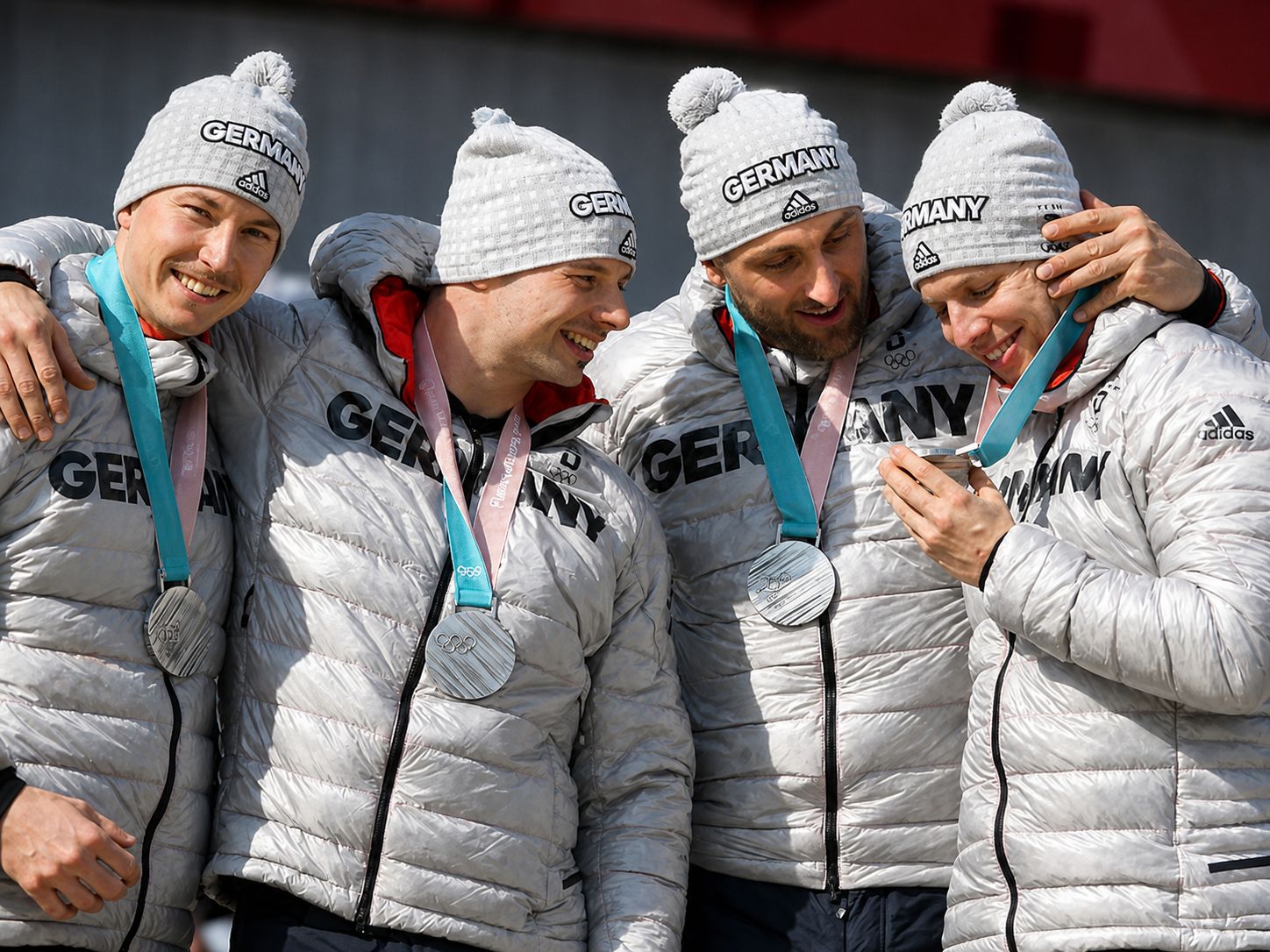
Four-man, four runs
Four runs. Three minutes and sixteen seconds of racing. We finished half a second behind gold and could not be separated from Korea by a single hundredth. Two silver medals awarded, no bronze.
I have thought about that half second for a long time. It was not lost on the day. It was lost, and it could have been won, in the years of work that nobody watched. That is the part of the sport I care about now, and it is the whole reason I coach the way I do.
Walther / Kuske / Rödiger / Franke
 Slot 02Full bleed, very wide crop
PyeongChang podium
images/eric-pyeongchang-podium.jpg
The Sovereign Athlete
In my experience it is almost always in one of three places. The week did not go the way the plan assumed. The athlete never really believed in it. Or four people were making decisions and none of them were talking to each other. I check all three before I write a single session.
Performance Environment
The travel, the sleep, the club calendar, the medical staff, the head coach who wants something different on Thursday. All of it decides whether a session happens the way it was written. So I build around the week you actually have rather than the one the textbook assumes, which usually means fewer sessions that survive rather than more that get abandoned by February. Skip this layer and you have written a plan for an athlete who does not exist.
Performance Identity
How an athlete sees themselves, and therefore what they do when nobody is checking. The one who thinks of himself as a hard worker adds volume you did not ask for and arrives at the session that mattered already tired. The one who has been told for years that he is not powerful will quietly avoid the heavy end of the programme, and you will not see it in the training log, you will see it a year later in a profile that has improved at the velocity end and stalled at the force end. A plan that contradicts what someone believes about themselves loses that argument every time. This is usually where the intervention actually is, and it is the layer most coaches skip because the conversation is uncomfortable.
Integrated Oversight
Most serious athletes have a club coach, a physio, a strength coach and a calendar somebody else controls. Very often nobody is reading all of it at once. The physio clears you on Monday, the club loads you on Tuesday, and the two decisions are never put side by side until something goes. That is the job I take: holding the whole picture, deciding what gets priority in a given week, and being the one who says out loud when two plans are pulling against each other. It is unglamorous and it is usually the difference.
The name is not decoration. The goal of the work is an athlete who can eventually run their own training decisions without me, because they understand why the thing is being done. If you still need me in five years, I have done a mediocre job.
Three ways in.
I keep the roster small on purpose. If I cannot give your situation real attention, I will tell you and point you somewhere better.
One to one coaching
Individual programming for speed, strength and return to play, built around your real season rather than an ideal one. Three month blocks, because anything shorter cannot tell you whether it worked.
Weekly written feedback, video review, and me on the other end rather than an app.
Sovereign Coach Foundations
You already know how to write a programme. We work on the rest: the decisions nobody teaches you, the identity underneath them, and the business you build on top. What you hold under pressure, what you actually believe, and what you charge for it.
Six modules, small cohorts, plus a private mentorship track with regular sessions and a full day in person.
Consulting and camps
Physical preparation for squads, talent identification days, and outside review of a setup that is not producing what it should. I have run national team preparation phases and testing camps, and I will tell you what I find rather than what is comfortable to hear.
Day rates and project work, in Germany, Latvia and further afield.
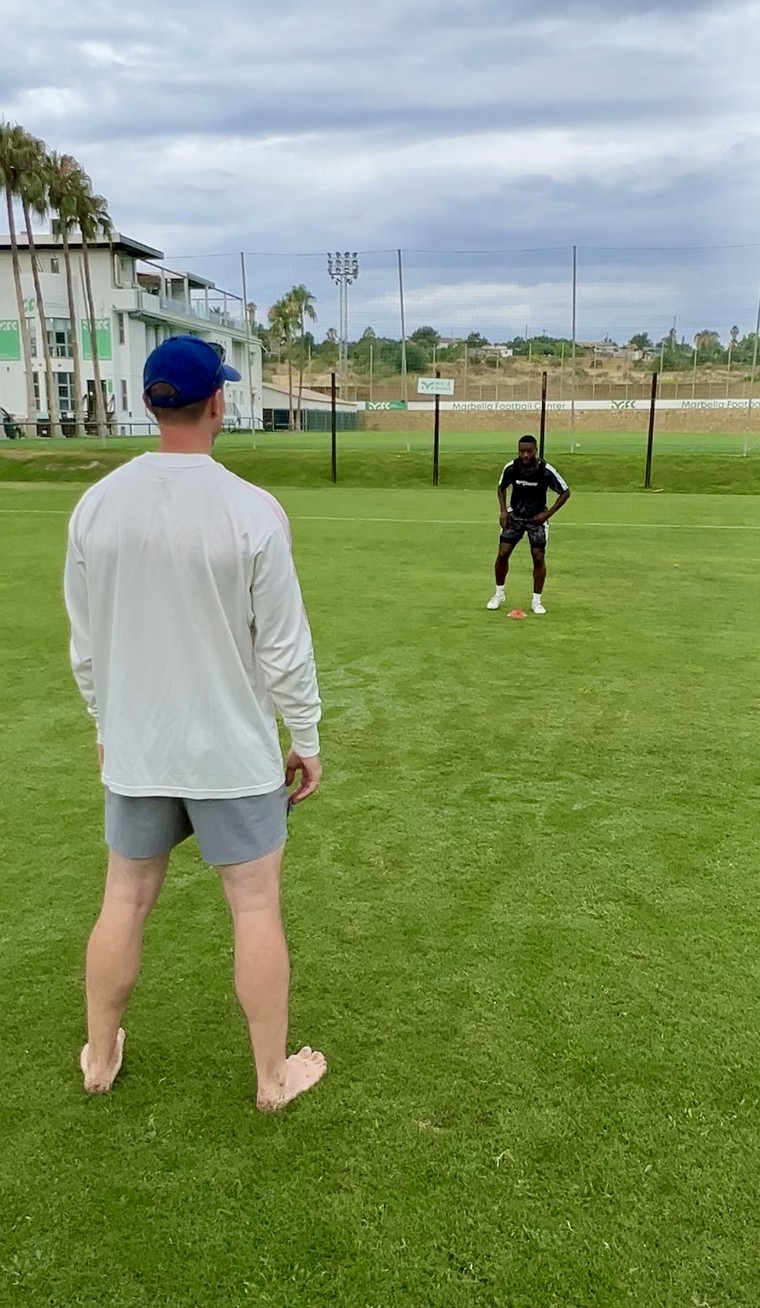 Slot 03Coaching in progress
You with an athlete, mid session, not posed
images/eric-coaching-session.jpg
What the work actually looks like.
Athletes are described by role only. Nobody I work with becomes marketing material without asking.
Top speed, entirely remote
He started the block at 33.2 km/h and finished it at 35.9, three and a half months later. I never stood on a pitch with him once. Everything ran remotely, which meant the programme had to be built around what his week at the club actually allowed rather than what I would have chosen, and it meant relying on his account of how each session had gone. The speed work itself was not unusual. The difficulty was placing it inside a competitive season without taking anything away from the club.
Return from surgery to fourth at the Games
Knee surgery and hip surgery, and sixteen months between the second operation and the start line at the 2026 Olympic Games, where he finished fourth. Most of that time had nothing to do with speed. It went on restoring his ability to accept load on one side without the other quietly taking over, and only then on rebuilding a push that had been gone for more than a year. Fourth is a hard result to sit with. Given where the sixteen months started, I would take it again.
Reshaping the squad's approach
I was brought in to change how an entire programme approached strength and conditioning rather than to coach any single athlete. The squad qualified the maximum number of sleds for the 2026 Olympic Winter Games and finished with two crews inside the top ten. The programming was not the slow part. The slow part was agreeing what the testing actually meant and who got to decide when an athlete was ready, because until that was settled every plan was liable to be overruled by somebody.
I was never the biggest or the strongest one in the sled.
That turned out to be the useful part.
I came to bobsleigh late, at twenty five, from track and field, and I was told fairly directly that I did not have the build for it. So I had to be precise about everything else. Every kilogram, every metre of the push, every training decision had to earn its place, because I did not have a margin to waste. Ten years later that is still how I coach.
I retired after a career that gave me an Olympic silver medal, a World Championship silver and two World Championship bronze medals, and a European Championship silver, and I moved into coaching without much of a plan beyond knowing that this was the work I wanted. Since then I have coached in bobsleigh, football, athletics and general population settings, in Germany, Latvia and wherever the work has taken me.
I build my year around my family rather than the other way round. Family commitments go into the calendar first and work fills in around them. This is not a lifestyle claim, it is a scheduling constraint, and it is the reason I take on fewer athletes than I could. It also means I understand the coaches I mentor who are trying to do serious work without giving up their entire life to it.
I live in Potsdam with my wife, who runs her own practice, and I spend a good part of the year in Latvia. Most of my thinking happens in transit between the two.
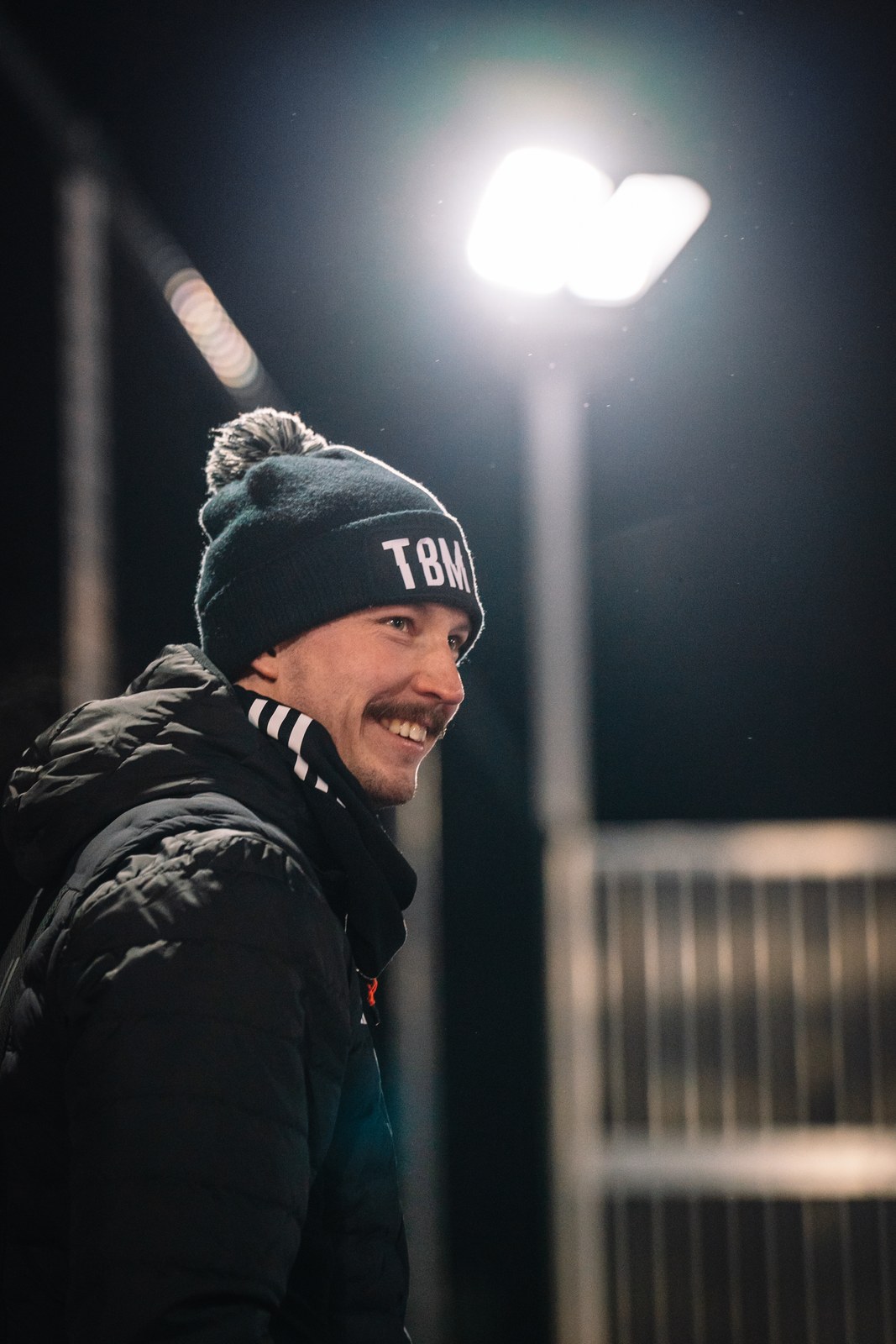 Slot 04The personal one
Off the track, warmer, everyday
images/eric-portrait-about.jpg
Tell me what you are actually dealing with.
Not what you think a coach wants to hear. The more honest the first message is, the faster I can tell you whether I am the right person, and I will say so if I am not.
I read every application myself and reply within three working days.
Would rather just write? eric.franke@live.com